

This page explains how to set up Microsoft Outlook 98 or Outlook 2000 to send and receive e-mail for a POP mailbox that you've created. (The screen shots below are from Outlook 2000, although Outlook 98 is similar.)
Tip: make sure that the program you are using is Microsoft Outlook, and not Microsoft Outlook Express. These two similarly named programs have different set up instructions. Be sure you do not see the word "Express" on the screen when you start the program.
1. Start the Microsoft Outlook program.
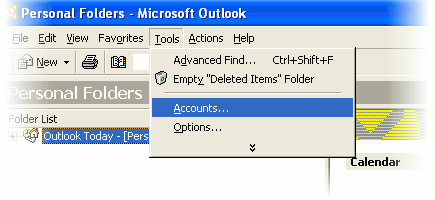
You can use the Start menu to start Outlook. When it opens, click Tools, then Accounts from the menu bar:
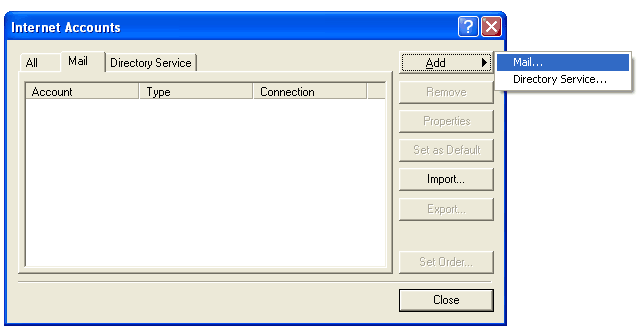
2. The "Internet Accounts" window appears.
On the right-hand side, click Add, then Mail.
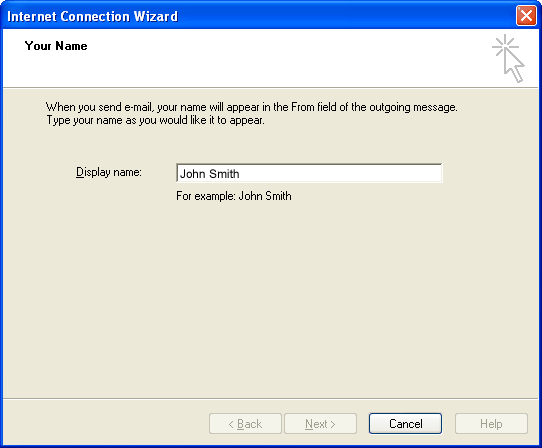
3. The "Internet Connection Wizard" window appears.
The wizard first asks for your name. This is the name that other people will see when you send them e-mail. It should usually be your real name, such as John Smith or Joan of Arc.
Type the name you want other people to see when you send them e-mail, then click Next.
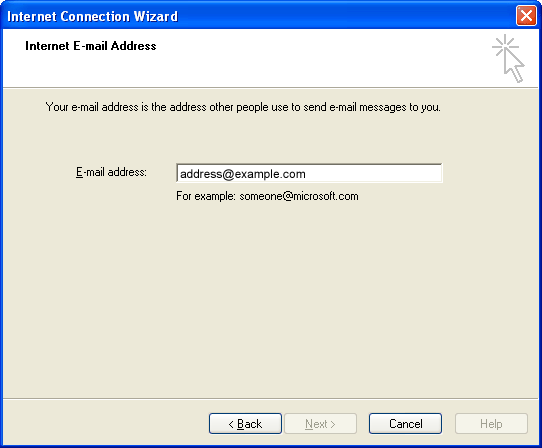
4. The wizard asks for your Internet E-mail Address.
Enter your e-mail address, then click Next. The address must be the e-mail address of the POP mailbox you created in your account management control panel.
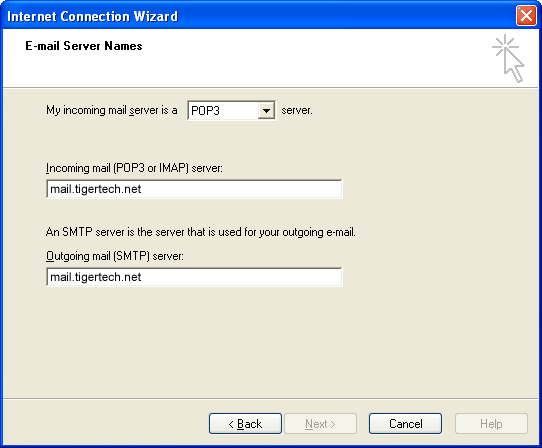
5. The wizard asks for your E-mail Server Names.
Leave the server type as POP3. Type mail.tigertech.net as the name of both your incoming and outgoing server, then click Next.
6. The wizard asks for your Internet Mail Logon.
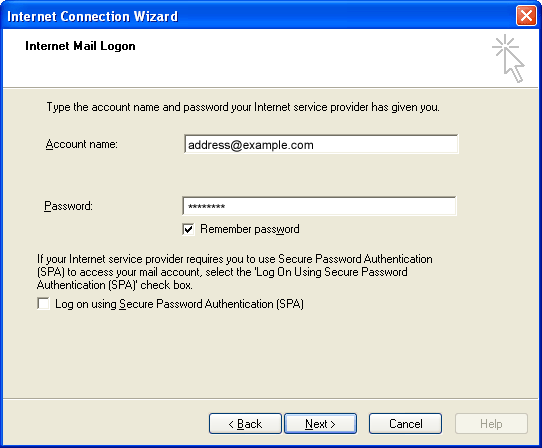
The "Internet mail Logon" is your e-mail username and password.
- Type your e-mail address as your account name (it must be all lowercase).
- Type your e-mail password, which is the password you chose for this e-mail address when you created the mailbox in your account management control panel. Or, we may have created it for you. Remember that this password may be different from your master account password.
- If you wish, check the Remember password box to have Outlook remember your password so that you don't have to type it each time you send or receive e-mail.
The window should look like this:
Click Next when finished.
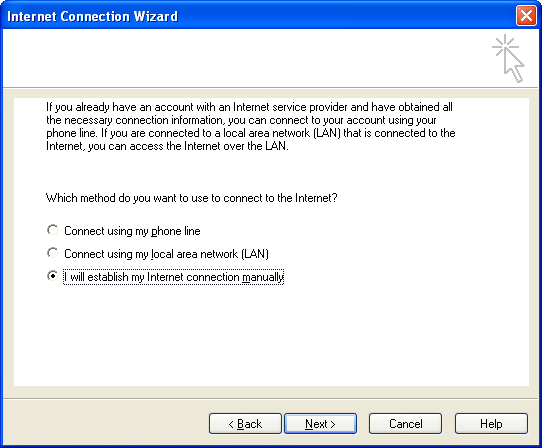
7. Microsoft Outlook asks for a method of connecting to the Internet.
Usually you will already have a connection to the Internet. In these cases you can choose I will establish my Internet connection manually.
Click Next when you have selected the appropriate option.
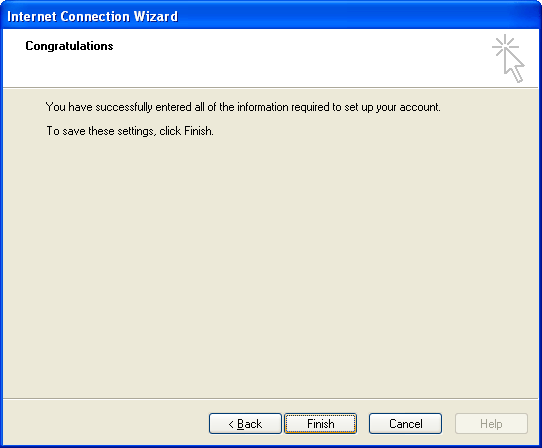
8. The wizard tells you that you've entered all the information.
Click Finish.
While the wizard has collected the basic information needed to receive e-mail, one other change is needed to make sure that you can send mail. Continue with the steps below to finish setting up Microsoft Outlook.
9. Continue with Outlook setup.
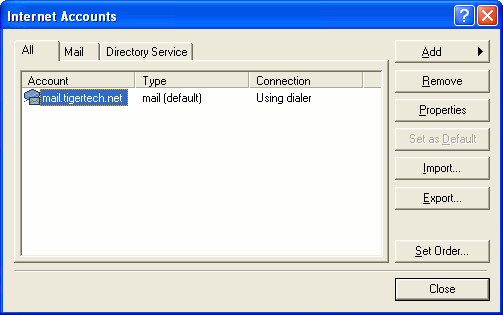
The "Internet Accounts" window should still be open. Highlight the new e-mail account and click Properties.
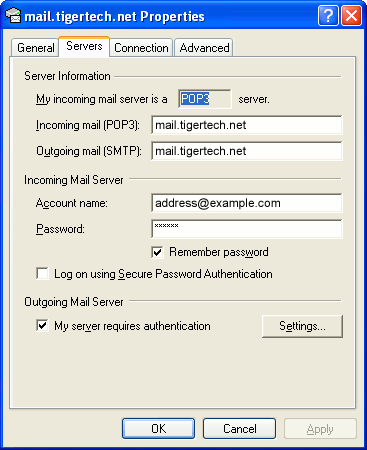
10. The "Properties" window appears.
Click the Servers tab and check My server requires authentication (at the bottom of the window). You don't need to click Settings; the default settings are fine. Also, note that you should not check Log On Using Secure Password Authentication.
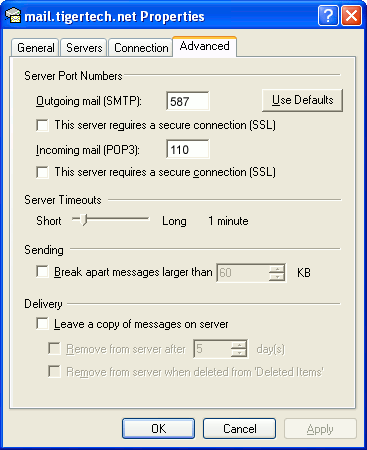
11. Change the SMTP port number.
Changing the SMTP port number ensures that your ISP will not block outgoing mail connections to our mail servers.
- Click the Advanced tab.
- Change the Outgoing mail (SMTP) port number from 25 to 587.
12. Close the setup windows.
Click OK to close the Properties window, then click Close to close the Internet Accounts window.
The setup is complete.
You're finished! Try sending yourself a test e-mail message to make sure it works.










osterreichische weine verkostung
Eine professionelle Verkostung offenbart die verborgenen Nuancen jedes Weins.
Die richtige Technik ist entscheidend, um das volle Potenzial eines Weins zu erkennen. Der Geruchssinn spielt eine zentrale Rolle, denn er bereitet den Geschmackssinn vor.
#### **2. Die Bedeutung der Sensorik bei der Verkostung**
Die sensorische Analyse ermoglicht es, komplexe Geschmacksprofile zu entschlusseln. Bitter, su?, sauer und umami – jeder Wein hat eine einzigartige Balance.
Erfahrene Sommeliers nutzen spezifische Begriffe, um Weine prazise zu beschreiben. „Eiche“ oder „Vanille“ verraten oft eine Fassreifung des Weins.
#### **3. Die Rolle von Temperatur und Glasform**
Die optimale Temperatur ist essenziell, um Aromen perfekt zur Geltung zu bringen. Wei?weine entfalten ihr Aroma am besten bei 8–12 °C.
Die Wahl des Glases beeinflusst die Wahrnehmung entscheidend. Der richtige Durchmesser des Glasrands steuert den Weinfluss auf die Zunge.
#### **4. Wein und kulinarische Harmonie**
Die Kombination von Wein und Essen kann ein unvergessliches Erlebnis schaffen. Frische Wei?weine erganzen Meeresfruchte und leichte Salate.
Experimentieren ist der Schlussel zur perfekten Paarung. Eine gut abgestimmte Kombination veredelt sowohl Wein als auch Gericht.
---
### **Spin-Template**
**>. Einfuhrung in die Weinverkostung]**
- Weinverkostung ist eine Kunst, die Sinne zu scharfen und Aromen zu entdecken.
Jeder Schluck erzahlt eine Geschichte, die von Klima und Boden gepragt ist.
- Die richtige Technik ist entscheidend, um das volle Potenzial eines Weins zu erkennen.
Man beginnt mit dem Betrachten der Farbe, um erste Hinweise auf Alter und Herkunft zu erhalten.
**>. Die Bedeutung der Sensorik bei der Verkostung]**
- Die sensorische Analyse ermoglicht es, komplexe Geschmacksprofile zu entschlusseln.
Die Zunge erfasst die Grundnoten, wahrend die Nase feinere Nuancen wahrnimmt.
- Erfahrene Sommeliers nutzen spezifische Begriffe, um Weine prazise zu beschreiben.
„Fruchtige“ Aromen erinnern an Beeren, Zitrus oder tropische Fruchte.
**>. Die Rolle von Temperatur und Glasform]**
- Die optimale Temperatur ist essenziell, um Aromen perfekt zur Geltung zu bringen.
Schaumweine bleiben frisch und perlend, wenn sie gut gekuhlt sind.
- Die Wahl des Glases beeinflusst die Wahrnehmung entscheidend.
Der richtige Durchmesser des Glasrands steuert den Weinfluss auf die Zunge.
**>. Wein und kulinarische Harmonie]**
- Die Kombination von Wein und Essen kann ein unvergessliches Erlebnis schaffen.
Ein voller Rotwein passt hervorragend zu dunklem Fleisch und wurzigen Saucen.
- Experimentieren ist der Schlussel zur perfekten Paarung.
Salzige Kasesorten heben die Fruchtnoten eines jungen Weins hervor.