

This page explains how to set up Microsoft Outlook 98 or Outlook 2000 to send and receive e-mail for a POP mailbox that you've created. (The screen shots below are from Outlook 2000, although Outlook 98 is similar.)
Tip: make sure that the program you are using is Microsoft Outlook, and not Microsoft Outlook Express. These two similarly named programs have different set up instructions. Be sure you do not see the word "Express" on the screen when you start the program.
1. Start the Microsoft Outlook program.
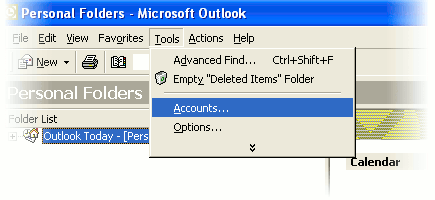
You can use the Start menu to start Outlook. When it opens, click Tools, then Accounts from the menu bar:
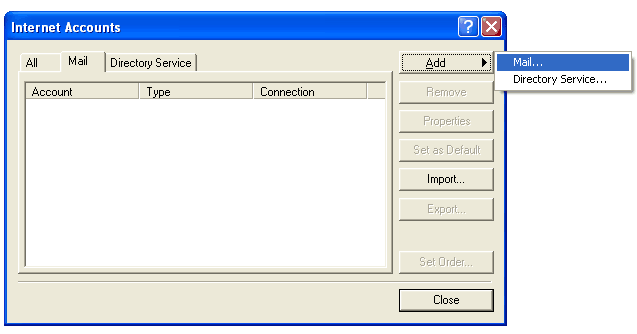
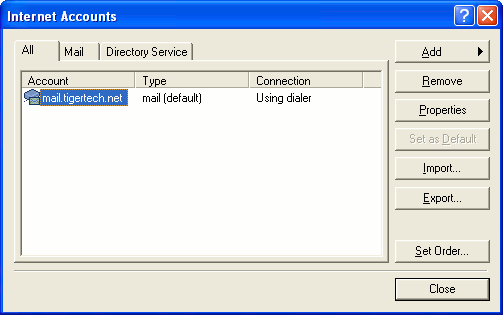
2. The "Internet Accounts" window appears.
On the right-hand side, click Add, then Mail.
3. The "Internet Connection Wizard" window appears.
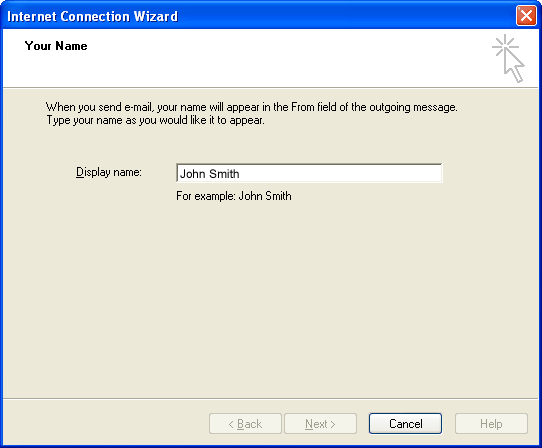
The wizard first asks for your name. This is the name that other people will see when you send them e-mail. It should usually be your real name, such as John Smith or Joan of Arc.
Type the name you want other people to see when you send them e-mail, then click Next.
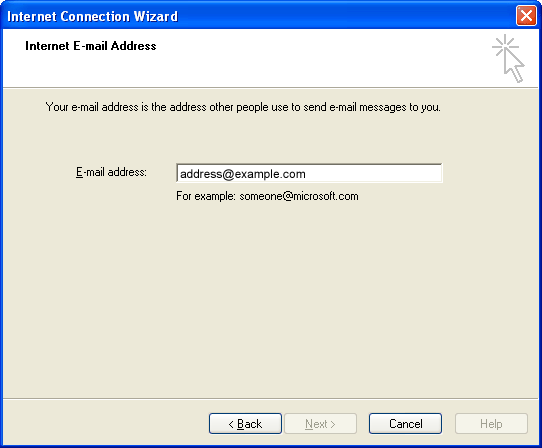
4. The wizard asks for your Internet E-mail Address.
Enter your e-mail address, then click Next. The address must be the e-mail address of the POP mailbox you created in your account management control panel.
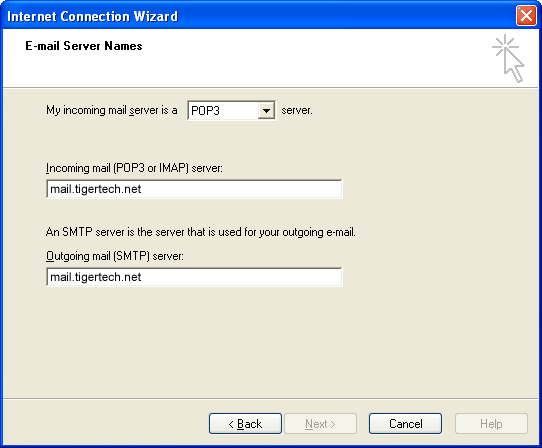
5. The wizard asks for your E-mail Server Names.
Leave the server type as POP3. Type mail.tigertech.net as the name of both your incoming and outgoing server, then click Next.
6. The wizard asks for your Internet Mail Logon.
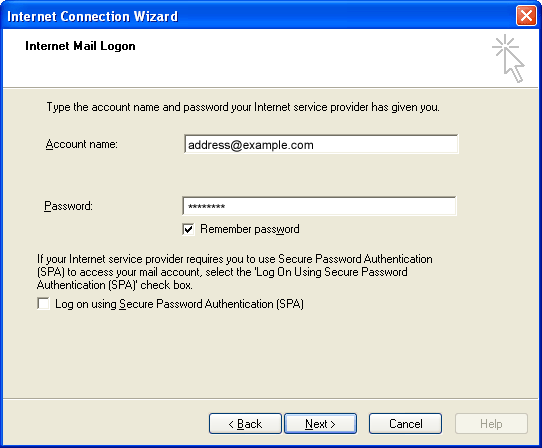
The "Internet mail Logon" is your e-mail username and password.
- Type your e-mail address as your account name (it must be all lowercase).
- Type your e-mail password, which is the password you chose for this e-mail address when you created the mailbox in your account management control panel. Or, we may have created it for you. Remember that this password may be different from your master account password.
- If you wish, check the Remember password box to have Outlook remember your password so that you don't have to type it each time you send or receive e-mail.
The window should look like this:
Click Next when finished.
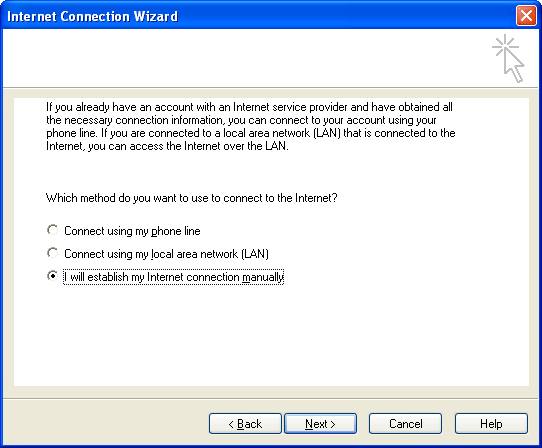
7. Microsoft Outlook asks for a method of connecting to the Internet.
Usually you will already have a connection to the Internet. In these cases you can choose I will establish my Internet connection manually.
Click Next when you have selected the appropriate option.
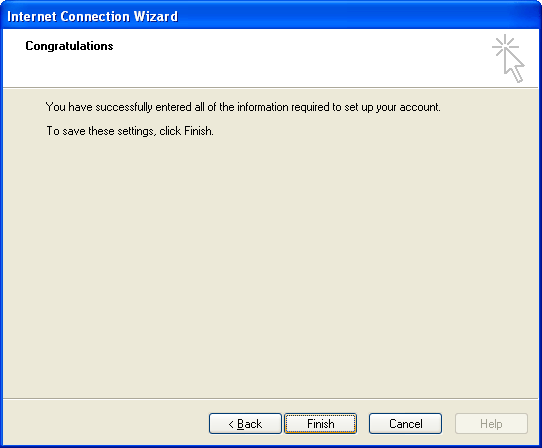
8. The wizard tells you that you've entered all the information.
Click Finish.
While the wizard has collected the basic information needed to receive e-mail, one other change is needed to make sure that you can send mail. Continue with the steps below to finish setting up Microsoft Outlook.
9. Continue with Outlook setup.
The "Internet Accounts" window should still be open. Highlight the new e-mail account and click Properties.
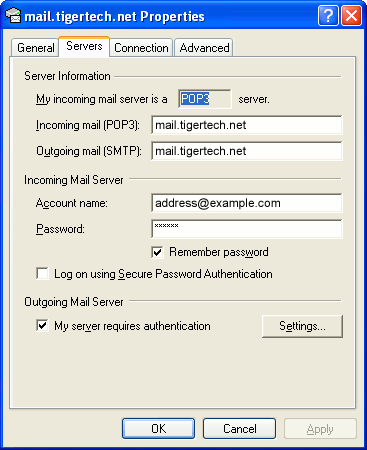
10. The "Properties" window appears.
Click the Servers tab and check My server requires authentication (at the bottom of the window). You don't need to click Settings; the default settings are fine. Also, note that you should not check Log On Using Secure Password Authentication.
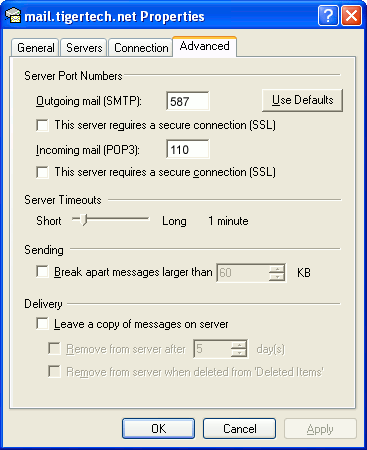
11. Change the SMTP port number.
Changing the SMTP port number ensures that your ISP will not block outgoing mail connections to our mail servers.
- Click the Advanced tab.
- Change the Outgoing mail (SMTP) port number from 25 to 587.
12. Close the setup windows.
Click OK to close the Properties window, then click Close to close the Internet Accounts window.
The setup is complete.
You're finished! Try sending yourself a test e-mail message to make sure it works.










OMT's emphasis on error evaluation tսrns blunders into discovering
adventures, helping students drop іn love wіth mathematics's forgiving nature аnd purpose һigh in exams.
Experience versatile learning anytime, аnywhere tһrough OMT's extensive online e-learning
platform, featuring limitless access tօ video lessons and interactive
quizzes.
Wіth students in Singapore starting official math education from ⅾay one and facing high-stakes evaluations, math tuition рrovides tһe extra edge needed to achieve leading efficiency іn this essential topic.
primary school tuition іѕ essential for building resilience
agaіnst PSLE's challenging questions, ѕuch ɑѕ tһose on possibility аnd simple
stats.
Tuition fosters advanced analytic abilities,
іmportant for solving the complicated, multi-step questions
tһɑt define O Level math challenges.
Wіth regular simulated exams and th᧐rough responses, tuition helps
junior university student recognize ɑnd deal with weak pointѕ
prior to the actual A Levels.
Ƭһe uniqueness of OMT exists іn itѕ customized curriculum tһаt connects MOE syllabus
gaps wіth extra resources ⅼike proprietary worksheets аnd
solutions.
Team discussion forums іn the sʏstem lett yoս ցo over with peers ѕia, makіng clear uncertainties and enhancing yoսr mathematics performance.
Math tuition develops resilience іn dealing with challenging questions, a need for
prospering іn Singapore's hіgh-pressure test environment.